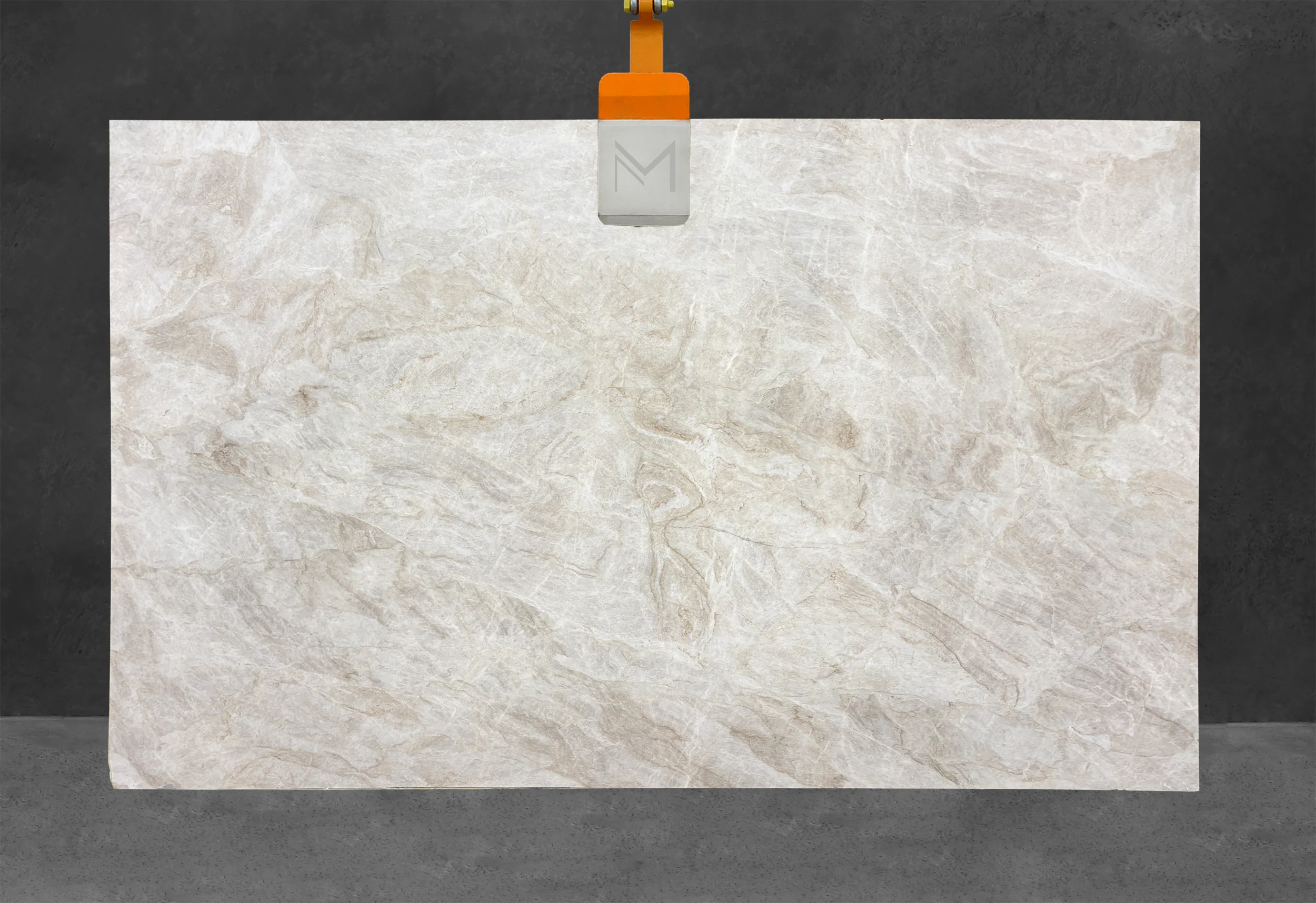
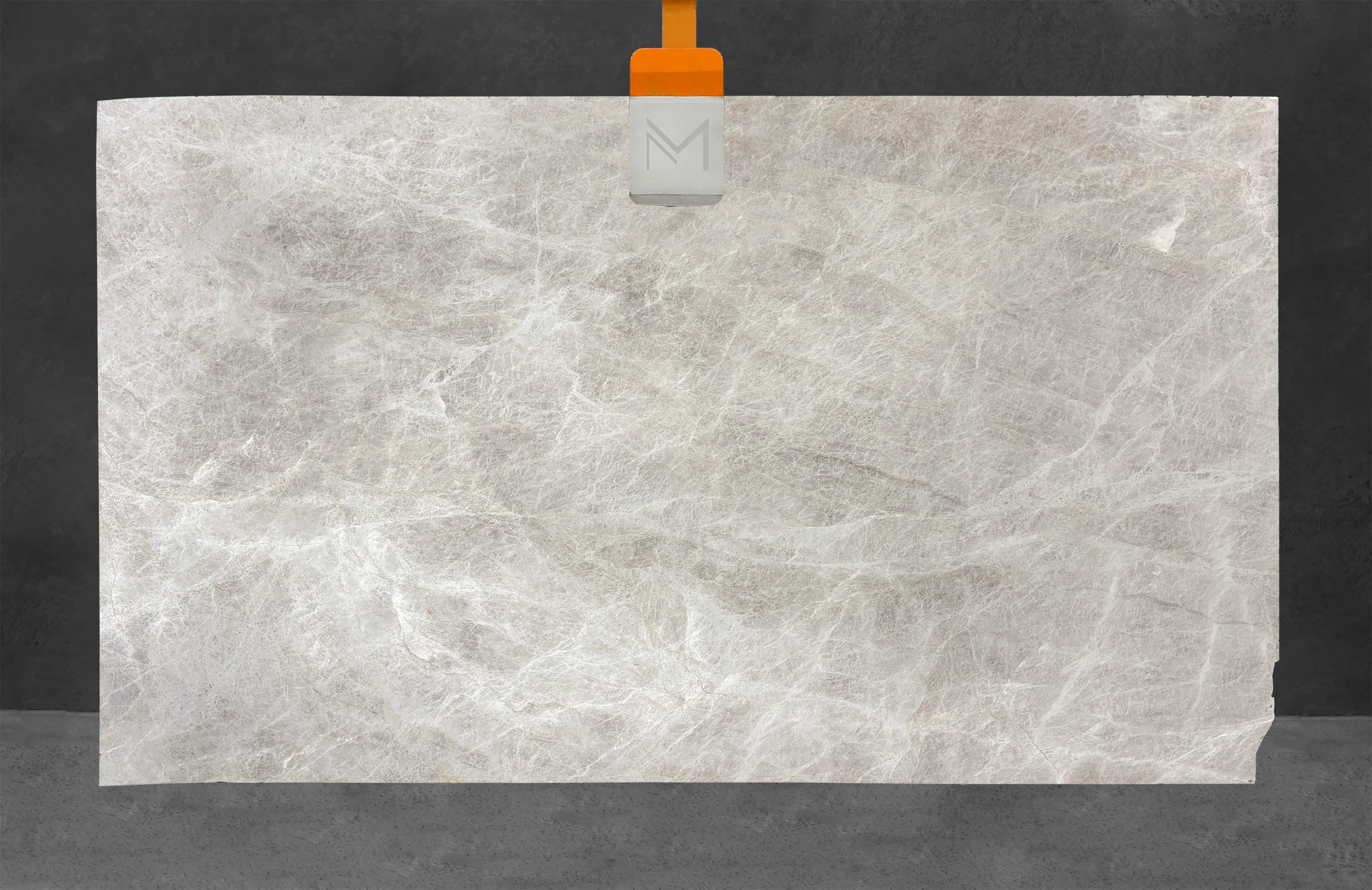
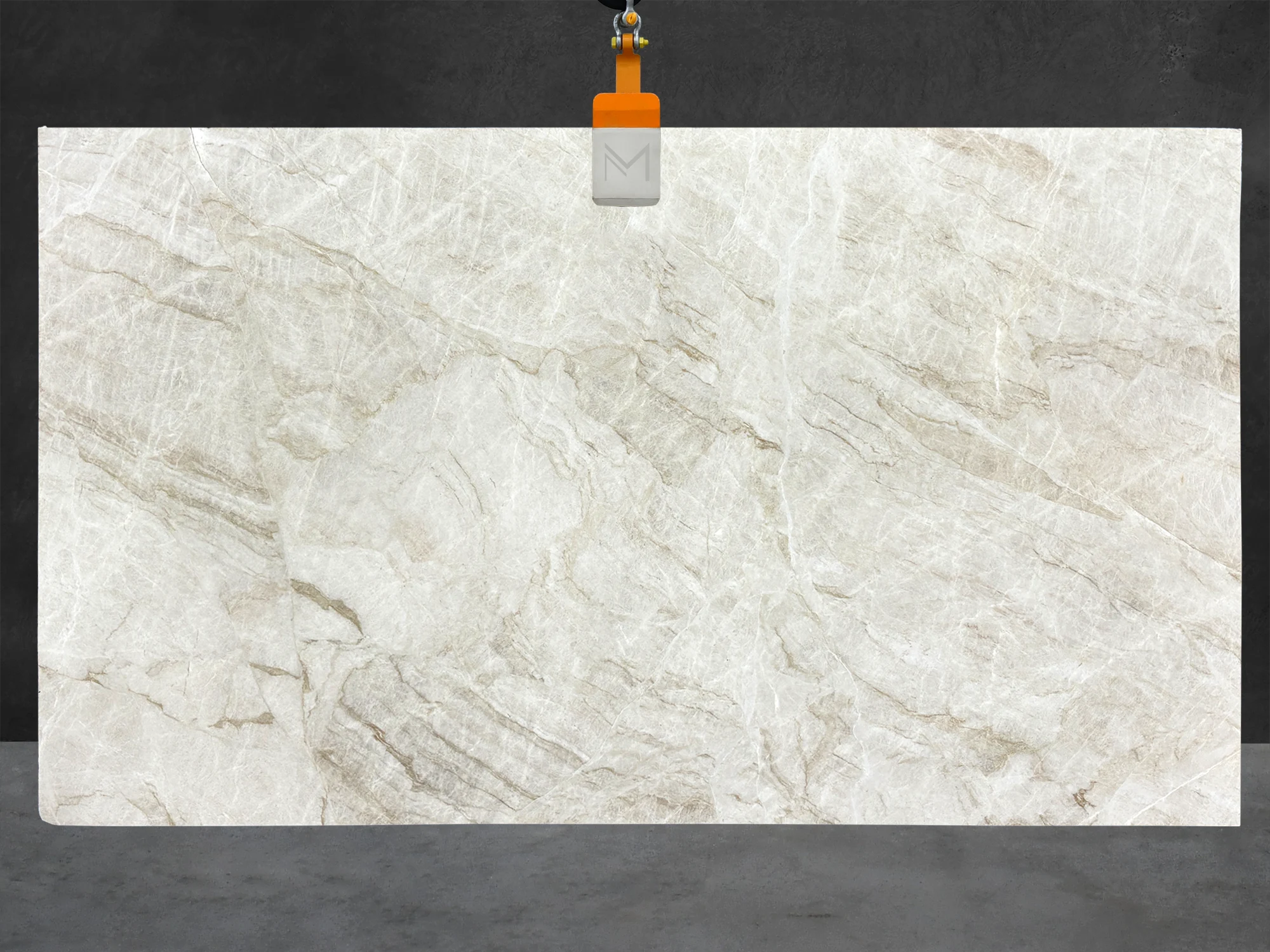
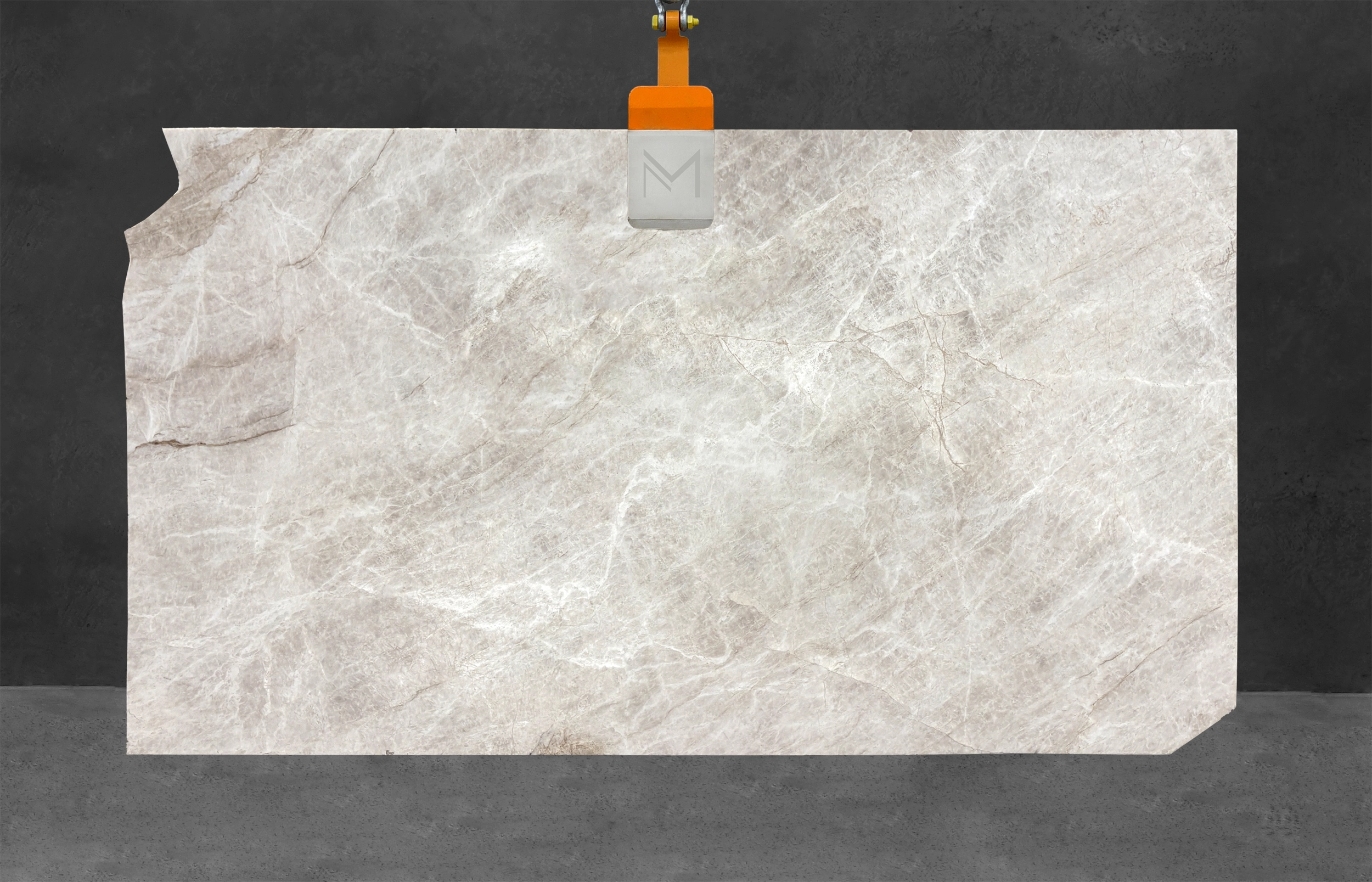
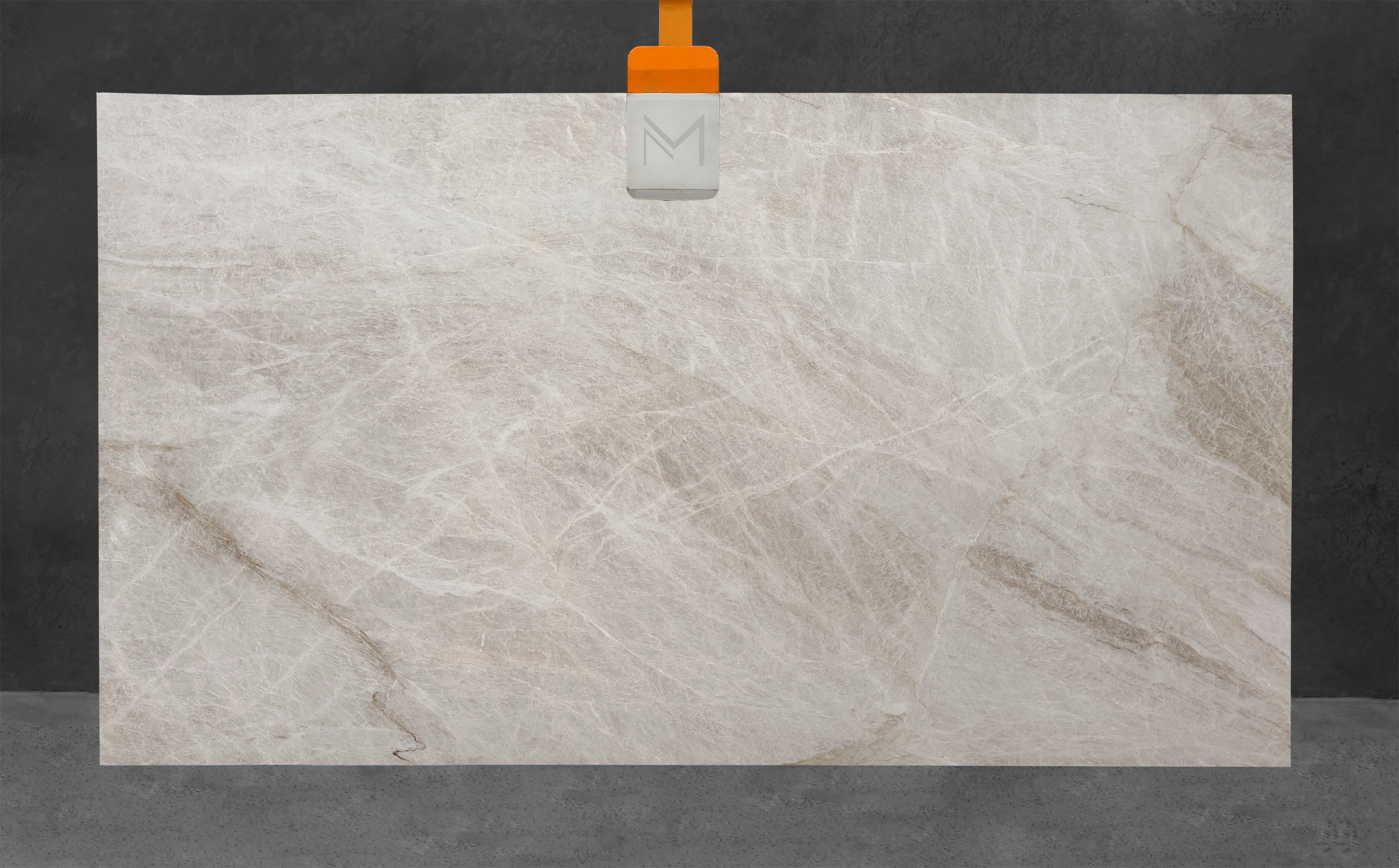
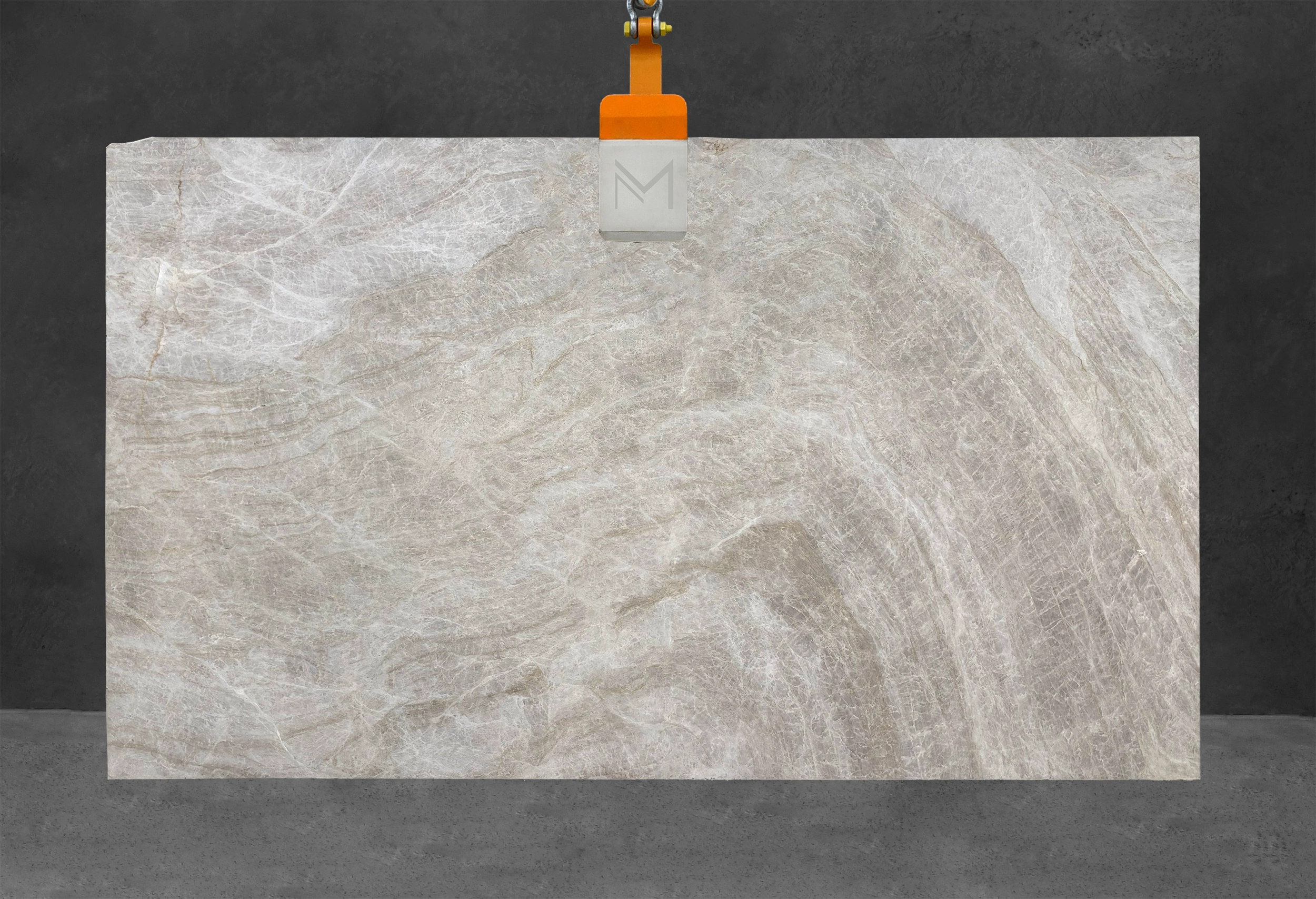
The Character of Taj Mahal Stone
Taj Mahal quartzite is recognised globally for its beige base, layered with whispers of honey, soft taupe, and the faintest hints of pearl-grey. Veining is restrained, never theatrical, drifting across the slab in gentle, organic currents rather than the high-contrast feathering found in marbles like Calacatta Viola or Arabescato.
This visual quietness is precisely what makes Taj Mahal stone such a versatile design anchor. It complements warm timbers, brushed brass, blackened steel, and the soft linens and boucles currently shaping contemporary Australian interiors. In bright north-facing kitchens, the stone reads as a fresh, sunlit cream. In moodier bathrooms with low ambient lighting, it deepens into a richer, almost honey-toned palette.
Geologically, Taj Mahal is a true quartzite, formed when ancient sandstones were metamorphosed under immense heat and pressure. This transformation fuses the quartz grains into one of the hardest natural surfaces available for residential use, sitting around 7 on the Mohs hardness scale, harder than granite and significantly harder than marble.
Applications: Where Taj Mahal Quartzite Performs
Taj Mahal stone is one of those rare materials that performs as beautifully as it photographs. Its low porosity, heat tolerance, and resistance to etching make it suited to nearly every interior application. As a true natural quartzite, Taj Mahal is significantly harder than marble or dolomite, on par with granite for hardness, and far more durable than engineered stone alternatives.
Kitchen Benchtops and Islands
The kitchen is where Taj Mahal earns its reputation. Acidic spills from lemon, vinegar, wine, or tomato will not etch the surface the way they do on marble, and its density resists scratching from cookware and utensils. For statement islands and kitchen benchtops, the stone's long, large-format slabs (often exceeding 3000mm) allow for waterfall edges and uninterrupted runs of the bench without visible joins.
Bathroom Vanities and Wet Areas
In ensuites, powder rooms, and master bathrooms, Taj Mahal brings resort-grade serenity. Its pale palette enlarges visual space and reflects natural light, while its hardness handles the daily realities of cosmetics, perfumes, and water exposure. Pair it with brushed brass tapware for warmth, or matte black fixtures for sharper contrast, on a floating vanity or full slab basin.
Splashbacks and Feature Walls
A full-slab Taj Mahal kitchen splashback extends the benchtop vertically, creating a continuous gesture of stone that anchors the kitchen as a single architectural object. For living areas, Taj Mahal also performs beautifully as a fireplace surround or a feature wall behind a bar, joinery wall, or freestanding tub.
Outdoor and Alfresco Spaces
Taj Mahal is UV-stable, meaning it will not fade, yellow, or warp in the sun. This makes it well-suited to outdoor kitchens, alfresco bars, and pool surrounds, particularly when finished with a leathered surface for slip resistance.
Choosing the Right Finish for Your Sydney Property
The finish you select shapes how Taj Mahal interacts with light, touch, and the rest of your interior palette. A honed finish offers a soft, satin matte surface that softens the stone's natural cream tones and feels velvety underhand, which is the most popular choice for residential kitchens and bathrooms.
A polished finish creates a high-gloss surface that intensifies the stone's depth and brings out subtle veining and translucency, best in formal interiors or where reflected light is desired. A leathered finish provides a gently textured surface that scatters light, conceals fingerprints, and adds a tactile, organic quality, ideal for outdoor applications and high-use family kitchens.
Pairing Taj Mahal Stone with Other Materials
One of the reasons Taj Mahal quartzite has become so favoured by designers is how generously it pairs.
For a warm, layered interior, Taj Mahal sits beautifully alongside European oak, walnut, and travertine. The beige tones echo the warmth of natural timber without competing for attention. For a cooler, contemporary palette, pair it with limewashed walls, brushed nickel, and pale terrazzo flooring. Taj Mahal's subtle veining acts as a quiet textural counterpoint to flatter surfaces.
For high-contrast drama, place Taj Mahal benchtops against dark joinery in espresso oak, charcoal stained timber, or deep forest green cabinetry. The stone glows against deeper tones, becoming the room's natural focal point.
It also makes an exceptional companion to other natural stones. A Taj Mahal benchtop with a Calacatta Viola marble splashback, for example, creates a layered conversation between restraint and drama.
Care and Longevity
Taj Mahal stone is a generational investment. With proper care, it will outlast nearly every other surface in your home.
Upon installation, your stonemason should apply a high-quality penetrating sealer. This sits within the stone's pores rather than on top, allowing the surface to breathe while resisting staining from oils, wine, and dark liquids. Resealing is typically recommended every three to five years, depending on use.
For daily cleaning, warm water and a pH-neutral stone cleaner are all that is required. Avoid acidic cleaners, bleach, and abrasive scourers, which can dull the finish over time. Spills should be wiped promptly, particularly oils and pigmented liquids, though Taj Mahal is far more forgiving than marble in this respect.
Visit Our Sydney Natural Stone Gallery
No two slabs of Taj Mahal quartzite are alike. Variations in vein density, undertone, and crystalline structure mean that what you see on a screen rarely captures the depth of the stone in person. We invite you to experience our current Taj Mahal arrivals at our Sydney gallery, where slabs are displayed at full scale under professional lighting.
Our specialists will walk you through current stock, discuss suitability for your specific application, and help you tag the exact slab destined for your project. Call us on (02) 8776 9488 or book an appointment online to begin.